

Introduction:
In the digital world, people frequently encounter phrases, keywords, and expressions that can have different meanings depending on the context in which they are used. One such keyword is “this is noted other term email.” Although the phrase may appear unusual at first, it can be understood by examining its individual parts: “this is noted,” “other term,” and “email.” These words relate to communication, acknowledgment, and the different ways people express understanding in written messages. Email communication remains an essential part of professional, academic, and personal life, making it important to understand how to acknowledge information clearly and appropriately.
The expression “this is noted” is commonly associated with recognizing or acknowledging information that someone has shared. In an email conversation, a person might use this expression to indicate that they have received a message, understood an instruction, or taken note of an important detail. However, the phrase can sometimes sound formal, brief, or even distant, depending on the situation. Learning alternative expressions can help people communicate more naturally, maintain professional relationships, and choose the right tone for different conversations.
This article explores the meaning of “this is noted,” alternative terms that can be used in emails, examples of professional email communication, common mistakes to avoid, and practical tips for writing clear and effective messages. Whether you are a student, employee, business owner, freelancer, or someone who regularly communicates through email, understanding these expressions can improve your writing skills and help you convey your message with confidence.
What Does “This Is Noted” Mean?
The phrase “this is noted” generally means that information has been acknowledged, recognized, or recorded for future reference. When someone uses these words in a conversation, they are communicating that they have noticed the information and understand that it may be important. In a professional environment, the phrase can be used to acknowledge instructions, updates, requests, decisions, or reminders received from another person.
For example, imagine that a manager sends an email explaining that a team meeting has been moved from Monday to Wednesday. An employee might respond with “This is noted” to indicate that the schedule change has been acknowledged. Similarly, a teacher might send students a reminder about an assignment deadline, and a student could reply with a brief acknowledgment.
However, the meaning of the phrase does not always imply agreement or completion. Saying “this is noted” generally confirms recognition of the information, but it does not necessarily mean that the person agrees with it, has completed the requested task, or promises to take action. If an email contains an instruction requiring action, a more specific response may be necessary.
For instance, if a supervisor asks an employee to submit a report by Friday, replying “This is noted” may acknowledge the deadline without clearly confirming that the employee will submit the report. A response such as “Understood. I will submit the report by Friday” communicates both acknowledgment and commitment.
Understanding this distinction is essential for effective email communication because it prevents confusion and ensures that the recipient understands what the sender intends to communicate.
Other Terms for “This Is Noted” in Email
There are many alternatives to “this is noted” that can make an email sound more natural, polite, professional, or friendly. The best expression depends on the purpose of the message, the relationship between the sender and recipient, and the level of formality required.
1. Noted, Thank You
“Noted, thank you” is a short and polite expression used to acknowledge information while showing appreciation. It is particularly useful in workplace emails, business conversations, and professional correspondence.
For example:
“Noted, thank you for sharing the updated schedule.”
This response confirms that the information has been received and adds a courteous acknowledgment. It is generally more welcoming than simply writing “Noted,” because the words “thank you” demonstrate appreciation for the sender’s effort.
2. Understood
“Understood” is one of the most direct alternatives to “this is noted.” It communicates that the recipient has understood the information or instructions provided.
For example:
“Understood. I will follow the updated procedure.”
This wording is especially appropriate when a manager, colleague, teacher, or client provides instructions. It is clear, concise, and professional.
However, if the email involves a sensitive matter or a complicated request, adding a sentence that explains the next step can make the response more useful.
3. Acknowledged
“Acknowledged” is a formal alternative that is frequently used in business, administrative, technical, and organizational communication. It indicates that the recipient has received and recognized the information.
For example:
“Acknowledged. We will review the changes and respond accordingly.”
This phrase works well when the sender needs confirmation that a message or instruction has been received. Nevertheless, it can sound somewhat impersonal in casual conversations, so a warmer alternative may be preferable when communicating with friends or close colleagues.
4. Duly Noted
“Duly noted” means that information has been properly acknowledged or taken into consideration. It is often used in formal correspondence, particularly when discussing instructions, feedback, concerns, or decisions.
For example:
“Your feedback regarding the revised proposal is duly noted.”
Although the phrase is grammatically correct, its tone depends on the situation. In some conversations, “duly noted” may sound formal or slightly defensive. When responding to a client or colleague, “Thank you for your feedback. I will take it into consideration” may communicate the same idea more warmly.
5. I Have Taken Note of This
This expression is more detailed than “this is noted.” It communicates that the recipient has consciously acknowledged the information and may refer to it later.
For example:
“I have taken note of the revised submission deadline and will plan accordingly.”
This wording is useful when the information is important and deserves a clear acknowledgment. It is particularly appropriate for formal emails involving deadlines, policies, instructions, or project updates.
6. Thank You for the Update
When someone shares new information, “Thank you for the update” is often a natural and friendly alternative.
For example:
“Thank you for the update. I appreciate you keeping me informed.”
This expression is especially useful when responding to progress reports, scheduling changes, business developments, or project announcements. It acknowledges the information without sounding overly formal.
7. I Understand
“I understand” is a straightforward expression that confirms comprehension. It can be used in professional and personal conversations.
For example:
“I understand the changes to the schedule and will adjust my plans accordingly.”
Unlike “noted,” this phrase places more emphasis on understanding the message. If the recipient needs to confirm a particular action, however, it is helpful to explain what they will do next.
8. I Will Keep This in Mind
This expression is useful when someone shares advice, suggestions, preferences, or information that may be helpful in the future.
For example:
“Thank you for your suggestions. I will keep them in mind while preparing the next draft.”
It sounds thoughtful and conversational, making it appropriate for feedback, recommendations, and discussions about future improvements.
9. Received With Thanks
“Received with thanks” is a formal expression that confirms receipt of a document, message, attachment, or piece of information.
For example:
“Received with thanks. I will review the attached document.”
This phrase is especially useful in administrative and business settings. It is more suitable for confirming receipt than for expressing agreement with an instruction or decision.
10. I Will Take Care of It
When the original email contains a request requiring action, “I will take care of it” may be more appropriate than “this is noted.”
For example:
“Thank you for letting me know. I will take care of the requested changes.”
This response communicates acknowledgment and a willingness to act. It should only be used when the recipient genuinely intends to handle the task.
Why Choosing the Right Email Expression Matters
Email is an important communication tool because it allows people to exchange information, coordinate activities, document decisions, and maintain professional relationships. Although short acknowledgment phrases may seem unimportant, they can influence how a message is interpreted.
A response that is too brief may leave the sender uncertain about whether the recipient understands the request. On the other hand, a long response to a simple reminder can make communication unnecessarily complicated.
Choosing the right expression helps balance clarity, professionalism, and efficiency. For example, a colleague who shares a meeting agenda may only need a brief “Thanks for sharing the agenda.” However, a client who requests several changes to a project proposal may deserve a more detailed response explaining which changes have been received and when they will be addressed.
Tone is equally important. Written communication lacks many of the signals people use during face-to-face conversations, including facial expressions, vocal tone, and immediate clarification. Consequently, a phrase such as “Noted” can be interpreted differently by different readers. Some may consider it efficient and professional, while others may perceive it as abrupt.
Adding a few thoughtful words can reduce this ambiguity. Instead of replying with “Noted,” you might write, “Thank you for the clarification. I understand the requirements and will make the necessary adjustments.”
This response remains concise while communicating appreciation, understanding, and the next step.
How to Use “This Is Noted” in Different Email Situations
The expression “this is noted” can be appropriate in several circumstances, but the surrounding context determines whether it is the best choice.
Professional Workplace Emails
In workplace communication, employees frequently receive updates about schedules, assignments, meetings, policies, and project requirements. Acknowledging these messages helps maintain an organized communication process.
For example, if a supervisor informs the team about a change in reporting procedures, an employee might write:
“Noted, thank you for informing me about the updated reporting procedure.”
If the message requires the employee to complete a task, a more specific response would be:
“Understood. I will use the updated reporting procedure for future submissions.”
The second example is more informative because it connects acknowledgment with the expected action.
Emails to Managers
When communicating with a manager, it is helpful to use respectful language while remaining concise. “Understood,” “Thank you for the clarification,” and “I will proceed accordingly” are useful expressions.
For example:
“Thank you for the clarification. I have noted the revised priorities and will organize my tasks accordingly.”
This wording acknowledges the information while demonstrating a clear understanding of the workplace expectations.
Emails to Clients
Client communication often requires additional attention to tone because the quality of written correspondence can influence trust and professional relationships.
Instead of replying with a simple “This is noted,” consider a more customer-focused response:
“Thank you for sharing your requirements. I have noted your preferences and will incorporate them into the next version of the proposal.”
This response acknowledges the client’s message and explains how the information will be used.
Academic Emails
Students may need to acknowledge messages from teachers, professors, school administrators, or academic advisers. In these situations, polite and direct language is generally appropriate.
For example:
“Thank you for informing me about the revised assignment deadline. I have noted the new date.”
If the teacher has requested a particular action, the student could write:
“Understood. I will submit the assignment by the revised deadline.”
This makes the response more specific and helps avoid misunderstandings.
Emails About Feedback or Complaints
When receiving feedback, it is important to acknowledge the sender’s concerns without implying agreement before the issue has been evaluated.
For example:
“Thank you for sharing your concerns. I have taken note of your feedback and will review the points you raised.”
This wording is professional and respectful. It confirms that the concerns have been recognized without making an unsupported promise about the outcome.
What Is the Difference Between “Noted,” “Understood,” and “Acknowledged”?
Although these expressions are sometimes used interchangeably, they have slightly different meanings.
Noted generally means that information has been registered or taken into consideration. It is useful for reminders, updates, and details that may be relevant later.
Understood emphasizes comprehension. It indicates that the recipient understands what the sender has communicated, particularly when instructions or explanations are involved.
Acknowledged emphasizes recognition or confirmation of receipt. It is particularly useful in formal communication where the sender wants confirmation that information has reached the recipient.
Consider the following examples:
- “Noted, thank you.” This indicates that the information has been registered.
- “Understood. I will follow the instructions.” This confirms comprehension and identifies the intended response.
- “Acknowledged. I have received the document.” This confirms receipt.
The difference may appear small, but using the right expression can make professional communication more precise.
How to Write a Professional Email Acknowledgment
Writing an effective acknowledgment does not require complicated vocabulary or lengthy explanations. In most cases, a short and clear response is sufficient.
Start With a Polite Acknowledgment
Begin by recognizing the sender’s message. You can use expressions such as “Thank you for the update,” “Understood,” or “I have received your message.”
The opening should match the context. A routine workplace reminder may require only a brief acknowledgment, while a detailed client request may benefit from a more considerate opening.
Confirm Your Understanding
If the message contains important instructions, deadlines, or expectations, briefly confirm the details you understand.
For example:
“I understand that the revised report is required by Thursday afternoon.”
This makes it easier for the sender to identify any misunderstanding before it becomes a problem.
Explain the Next Step
When action is required, tell the sender what you intend to do. For example:
“I will review the document and send the revised version by Thursday.”
A response like this is more useful than “This is noted” because it communicates both understanding and a practical commitment.
Keep the Message Concise
An acknowledgment should generally be brief unless the situation requires a detailed response. Avoid repeating the entire original email or adding unnecessary explanations.
A concise message can still be courteous and informative. For example:
“Thank you for the update. I have noted the new meeting time and will attend accordingly.”
This single response acknowledges the message, identifies the relevant detail, and confirms the intended action.
Review Your Tone Before Sending
Before sending an email, consider how the recipient might interpret your wording. A response that seems neutral to you may sound dismissive to someone else.
If the conversation involves a sensitive subject, feedback, or a disagreement, use language that demonstrates respect and willingness to communicate. Replacing “Noted” with “Thank you for explaining the situation. I understand your concern and will review it carefully” can make a meaningful difference.
Common Mistakes to Avoid When Using “This Is Noted”
Although acknowledgment phrases are simple, they can cause confusion when used without considering the purpose of the message.
One common mistake is using “Noted” when the sender expects a commitment. If a manager asks whether an employee can complete a task by a particular deadline, replying “Noted” does not clearly answer the question. A direct response such as “Yes, I can complete it by Friday” is more appropriate when that commitment is accurate.
Another mistake is using overly formal language in casual conversations. Expressions such as “Duly noted” or “Acknowledged” can sound unnatural when replying to a friendly message from a close colleague. A simple “Thanks for letting me know” may be better.
A third mistake is assuming that acknowledgment means agreement. Recognizing someone’s opinion or request does not mean that you accept every point they make. If a proposal requires review, say so clearly rather than suggesting that a decision has already been made.
Finally, avoid using vague language when the message concerns important responsibilities. If a client requests a revision, confirm what will be revised and, when possible, provide a realistic timeline. Clear communication reduces unnecessary follow-up emails and improves working relationships.
The Role of Email in Modern Communication
Email continues to play an important role in professional and personal communication because it provides a convenient way to exchange information across different locations and time zones. Unlike many instant messaging conversations, email also provides a written record that can be revisited when necessary.
In the workplace, email is commonly used to share documents, confirm agreements, distribute announcements, coordinate meetings, and communicate project updates. In education, it allows students and teachers to discuss assignments, deadlines, and academic requirements. Individuals also use email for personal correspondence, online accounts, service requests, and other everyday activities.
Because email serves so many purposes, effective writing involves more than choosing the correct words. It requires understanding the recipient, identifying the purpose of the message, and presenting information in an organized manner.
Acknowledgment phrases are one small but important part of this process. When used appropriately, they help people confirm receipt, demonstrate attention, and clarify what will happen next.
For example, a business professional who receives an important document might reply, “Thank you for sending the document. I have received it and will review it before our meeting.” This message gives the sender useful confirmation and establishes a clear expectation.
Similarly, a student who receives an assignment update might write, “Thank you for the information. I have noted the revised deadline and will plan accordingly.”
These examples demonstrate how simple language can support effective communication without making emails unnecessarily long.
Best Practices for Clear and Effective Email Communication
Good email writing begins with a clear purpose. Before composing a message, consider whether you need to acknowledge information, ask a question, provide an update, confirm a decision, or commit to an action. Identifying the purpose makes it easier to choose appropriate wording.
Use a meaningful subject line so that recipients can quickly understand what the email concerns. Keep paragraphs focused on individual points, especially when discussing several tasks or requirements. When responding to a request, answer the main question directly rather than relying on vague acknowledgment phrases.
It is also helpful to maintain a professional but natural tone. You do not need complicated vocabulary to sound professional. Expressions such as “Thank you for the update,” “I understand,” and “I will review the document” are effective because they communicate clearly.
Accuracy is another essential consideration. Never promise to complete a task unless you reasonably expect to meet the commitment. If you need more time or clarification, explain that honestly. For example, “I have received your request and will confirm the delivery date after reviewing the requirements” is more responsible than making an uncertain promise.
Finally, proofread your message before sending it. Check spelling, grammar, names, dates, attachments, and any promised deadlines. A brief review can prevent avoidable errors and help you communicate with greater confidence.
Frequently Asked Questions (FAQs)
1. What does “this is noted” mean in an email?
“This is noted” means that the recipient has acknowledged or registered the information provided. It usually confirms that the message has been noticed, but it does not necessarily mean that the recipient agrees with it or has completed the requested action.
2. What is another word for “this is noted”?
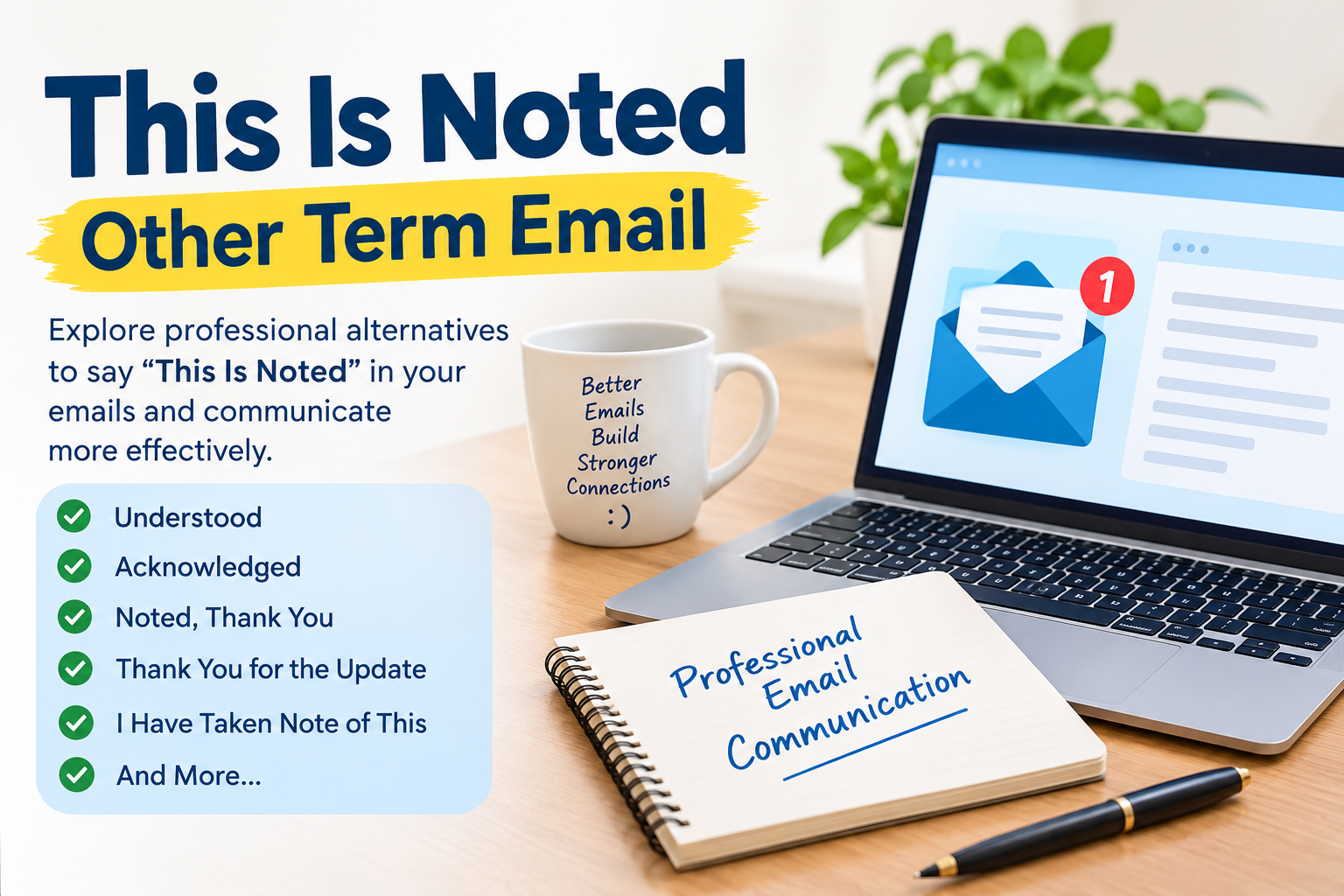
Common alternatives include “Understood,” “Acknowledged,” “Duly noted,” “Thank you for the update,” and “I have taken note of this.” The most suitable option depends on the formality and purpose of the email.
3. Is “noted” a professional email response?
Yes, “noted” can be a professional response, particularly when acknowledging straightforward information or routine updates. However, it may sound abrupt in some situations. Adding “thank you” or explaining the next step can make the response clearer and more courteous.
4. Is “noted with thanks” correct English?
Yes, “noted with thanks” is an established expression used to acknowledge information politely. It is suitable for many professional contexts, although “Thank you for the information” may sound more natural in everyday communication.
5. What is the difference between “noted” and “understood”?
“Noted” emphasizes that information has been registered or acknowledged, while “understood” emphasizes comprehension. If someone gives you an instruction, “Understood. I will follow the instructions” may communicate your response more clearly.
6. Can I use “duly noted” in a formal email?
Yes, “duly noted” can be used in formal emails to indicate that information has been acknowledged or taken into consideration. However, depending on the conversation, it may sound stiff or defensive. A more conversational alternative may be preferable when maintaining a friendly professional relationship.
7. How do I reply to an email when I have understood the instructions?
You can write, “Understood. I will follow the instructions and complete the task by the agreed deadline.” If you are uncertain about any part of the instructions, ask for clarification instead of implying that everything is clear.
8. Does “this is noted” mean that I agree?
No. Acknowledging information does not automatically indicate agreement. If you need time to consider a proposal, you can say, “Thank you for sharing this. I have taken note of your suggestion and will review it before responding.”
9. What is the most polite alternative to “noted”?
“Thank you for the information” is a polite and widely applicable alternative. Other options include “Thank you for the update,” “I appreciate the clarification,” and “Thank you for letting me know.”
10. What should I write instead of “this is noted” when a task requires action?
Use a response that acknowledges the request and identifies the intended action. For example, “Understood. I will review the document and send the revised version by Friday.” Only include a deadline or commitment that you can reasonably meet.
11. Is “acknowledged” better than “noted”?
Neither expression is universally better. “Acknowledged” can sound more formal and emphasizes recognition or receipt, while “noted” is shorter and often suggests that information has been registered. Choose the expression that best fits your audience and purpose.
12. How can I make a short email acknowledgment sound friendly?
Add a brief expression of appreciation or explain the next step. For example, instead of writing “Noted,” you could write, “Thanks for letting me know. I will keep this in mind.” This maintains brevity while creating a warmer tone.
Conclusion
The keyword “this is noted other term email” relates to an important aspect of written communication: finding appropriate alternatives to acknowledge information in an email. Although “this is noted” can be useful in professional settings, several other expressions can communicate the same idea with greater clarity, warmth, or precision.
Alternatives such as “Understood,” “Acknowledged,” “Noted, thank you,” “Thank you for the update,” and “I have taken note of this” each serve slightly different purposes. The right choice depends on whether you are confirming receipt, demonstrating understanding, responding to feedback, or agreeing to take action.
The most effective email responses are not necessarily the longest or most formal. They are the ones that communicate the intended meaning clearly, respect the recipient, and explain any necessary next steps. When an email requires action, avoid relying on a vague acknowledgment alone. Instead, confirm your understanding and state what you will do when appropriate.
By using suitable alternatives to “this is noted,” you can make your emails more professional, natural, and effective. Whether you are communicating with a manager, colleague, client, teacher, or friend, clear acknowledgment helps prevent misunderstandings and supports stronger communication in everyday life.
Is this conversation helpful so far?